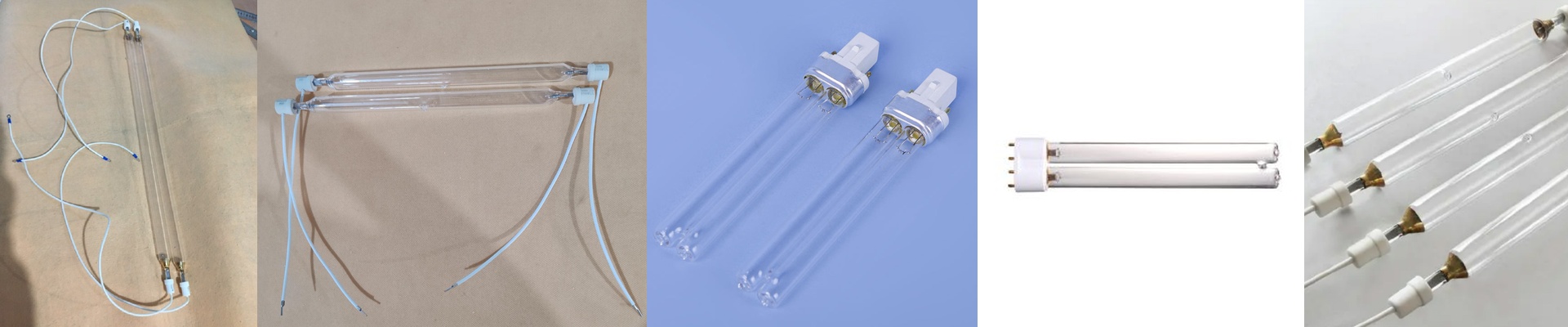

Walk any shift in a modern label or packaging plant and you’ll hear the same gripe between machines: the sharp ozone bite near the UV dryer, the heat rolling off the lamp housing, and the maintenance crew swapping lamps sooner than the schedule says. After spending time in close to 3,000 press rooms—running high-speed offset, flexo, and screen lines—the pattern is consistent. Ozone isn’t just a comfort issue. It’s a process variable that pushes operators to back off power, crank up extraction, or run the lamp lower just to keep the air manageable. That trade—less ozone or less cure—doesn’t have to be the default. We built our UV lamps around a hard engineering constraint: control the ozone production rate while keeping the spectral output, peak irradiance, and energy density that the ink chemistry actually needs.
What matters, technically
In UV curing, you don’t “just need UV.” You need photons at the wavelengths that match the photoinitiators in the ink, delivered with enough irradiance to drive cross-linking at the press speed. A high-pressure mercury vapor lamp is still the workhorse because its emission lines line up with common photoinitiator absorption: 365 nm (I-type), 385–395 nm (common in LED-compatible and hybrid systems), and broader output into the 400–450 nm region for certain pigmented systems. But the same discharge that gives you those useful wavelengths also generates short-wave UV below 240 nm. When that hits oxygen in the air, you get ozone. So the first lever is spectral shaping. We use dichroic-coated quartz sleeves and tailored envelope doping to suppress the 185 nm line while keeping stable output at the curing-relevant wavelengths. The payoff is a measurable reduction in ozone production rate at the same electrical input, without taking away the energy the ink needs to cure. The second lever is optical efficiency. A lamp can emit the right spectrum, but if the reflector geometry and surface finish waste flux, the substrate sees lower peak irradiance. We spec elliptical or faceted reflectors with tight focal tolerances so the arc is imaged onto the web with intensity uniformity around ±8% across the cure window. That keeps the required energy density stable, and that matters because curing isn’t a threshold—it’s a dose equation: Energy density (mJ/cm²) = Peak irradiance (mW/cm²) × Exposure time (s) If your press speeds up, exposure time drops. To keep the same energy density, peak irradiance has to rise. Our lamp systems are engineered to deliver the irradiance needed for modern line speeds while keeping ozone generation low through spectral control, not by dialing down power. The third lever is process stability. Lamp output decays over life from electrode erosion, mercury depletion, and reflector degradation. We target a controlled maintenance curve—maintaining ≥90% of initial irradiance at the cure plane over 2,000 hours under standard operating conditions—so you can schedule maintenance on the calendar, not when the cure suddenly drops off.
Why this works in the real world
This design didn’t come from a spreadsheet. It came from standing by the dryer on a 12-hour shift, watching operators trim power because the extraction ducts were running too hot, or because the smell on the floor set off safety concerns. It came from seeing ink not fully cross-linked at the edge of the sheet when the lamp was pushed to the limit, and watching curing drift when airflow changed. In that reality, the value is straightforward: you can run the lamp at the power the ink requires without turning the drying section into an ozone source. That matters because ozone is more than an odor. It accelerates corrosion in electrical cabinets, degrades rubber components, and can irritate operators—driving ventilation costs up and forcing compromises in lamp positioning. By lowering the ozone production rate at the source, we reduce the load on extraction, cut the heat returned into the plant, and ease the pressure to under-power the lamp. The practical gains show up as uptime and repeatability:
- Stable cure across the sheet means fewer rejects from tackiness or incomplete cross-linking.
- Predictable lamp output cuts the need for “just in case” power tweaks mid-run.
- Lower ozone generation keeps the dryer closer to EHS air quality targets without forcing speed reductions. We also built for the way modern plants run—mixed chemistries, mixed substrates, tight changeovers. Whether you’re curing clear overprint varnish on film, pigmented flexo inks on label stock, or thick-build screen inks, the lamp’s spectral output stays consistent, and the dose delivered at the substrate is repeatable run after run.
The details you can’t skip
No mercury-based UV lamp is truly “zero ozone” unless it’s LED or uses an ozone destruction cell. With mercury lamps, some short-wave emission is inherent. Our approach reduces ozone production rate through spectral control and optical design, but it still needs proper integration. Installation and operating conditions matter. Ozone forms when oxygen is present and the short-wave field is strong. If the lamp housing is undersized, if the reflector is contaminated, or if airflow pulls oxygen directly into the highest-intensity zone, you can lose the gains. Plan for:
- Adequate inert gas purge in the lamp chamber where the arc is exposed.
- Clean, cool airflow across the reflector and shutter to prevent heat soak that shifts output.
- Lamp positioning that keeps the focal line on the substrate and away from chamber edges where oxygen can get trapped. Compatibility is another real constraint. Retrofitting isn’t plug-and-play unless lamp length, arc gap, terminal style, and cooling profile match the existing dryer. We spec lamps to fit common press platforms—Heidelberg, KBA, Manroland, Gallus, Mark Andy, and screen/flexo dryers—so you can replace lamps without re-engineering the chamber. But if the chamber was designed around a different spectral profile or reflector focal length, expect to adjust power settings and purge flow to get the full benefit. Finally, measure like you mean it. Treat ozone control the way you treat any process parameter. Use a calibrated ozone sensor near the exhaust, and confirm cure with a radiometer at the substrate plane. When both readings stay stable, you’ve got a repeatable process. When they drift, adjust airflow and lamp power together—not one at a time. If your plant is running modern speeds and your dryer is battling ozone, the answer isn’t to accept slower curing or bigger extraction costs. The answer is a UV lamp built around the real physics of the press room: spectral control that keeps ozone low, and optical delivery that keeps curing energy high.