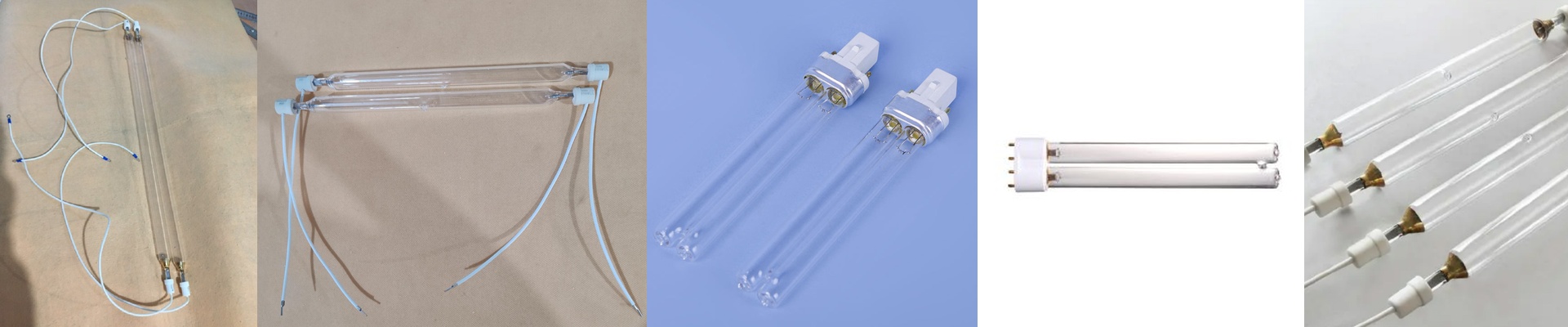
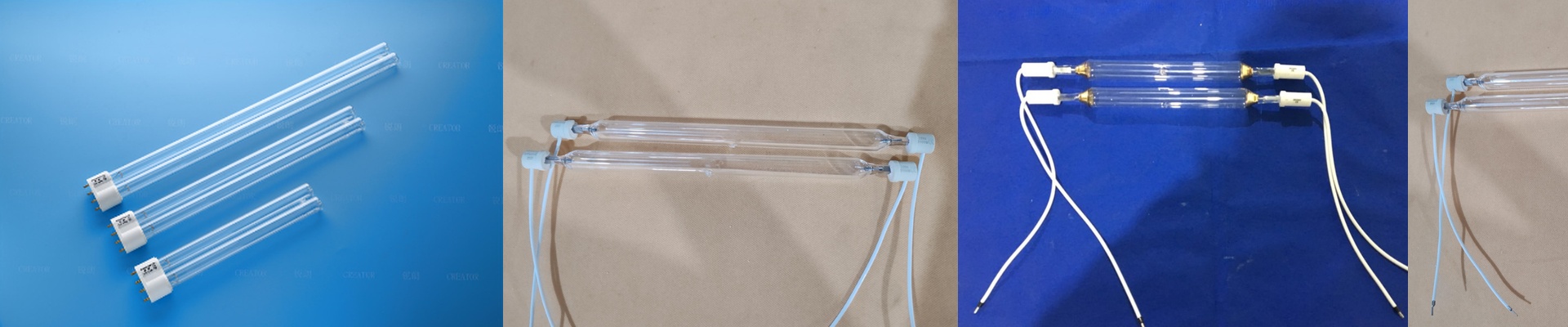
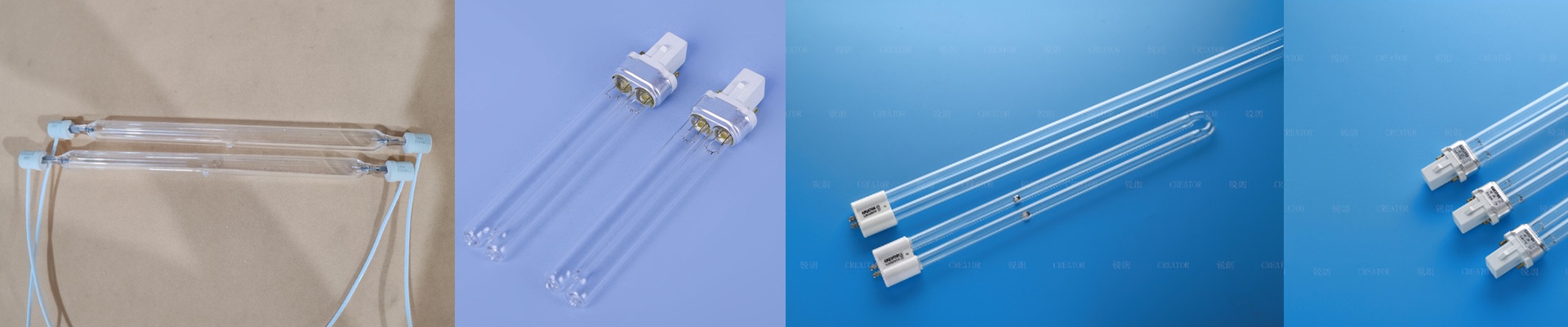
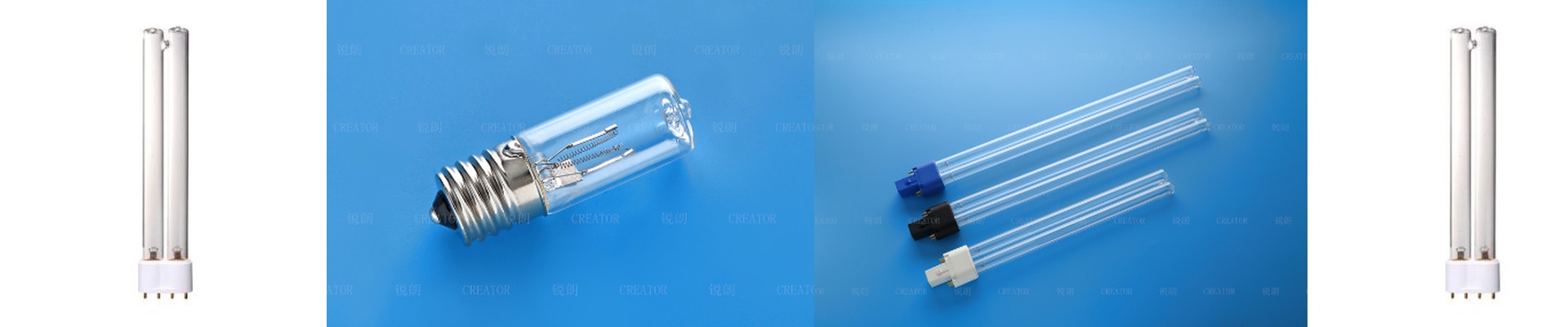
You’re on the press, and the sheets coming off aren’t curing. Surface stays tacky—blocking, dust pickup, and then the finishing defects start piling up. First instinct is to blame the ink, but in real-world UV offset, flexo, and screen work, the usual suspect is the lamp system—specifically, a UV lamp that’s well into its photometric decline. UV curing comes down to delivering a stable dose of photon energy to the photoinitiators. When output drops below what’s needed for full cross-linking, the polymer network never fully forms, no matter how dialed the ink viscosity or additives are. The result looks inconsistent: good runs, then adhesion failures, pinholing, and uncured residue on the substrate.
What actually matters
A submersible UV germicidal lamp is built around a low-pressure mercury vapor discharge, tuned to deliver a dominant spectral line at 254 nm. In industrial UV curing, the lamp has one job: put a controlled, repeatable irradiance profile on the ink surface so the photoinitiator package can kick off polymerization with minimal residual monomer. These are the parameters you should be able to measure and verify in the field:
- Spectral output: For many germicidal and surface-treatment tasks, the stable 254 nm line is the core driver. In curing, output consistency over time matters most; spectral shift is less common than plain output decay.
- Peak irradiance: This is instantaneous power density at the target plane, typically mW/cm². It sets how fast the photoinitiator absorbs enough energy to start cross-linking.
- Energy density (dose): Delivered dose in mJ/cm² is irradiance integrated over exposure time. If the dose falls off, the cure is incomplete even when conveyor speed hasn’t changed.
- Lamp life and photometric decline: Mercury lamps degrade through electrode erosion, amalgam formation, and quartz sleeve transmission loss. Output can drop well before the lamp fails electrically. A lamp in decline may still ignite, yet deliver 20–40% less UV output.
- Reflector and optical efficiency: The reflector assembly directs UV energy onto the substrate. Degradation of the dichroic coating and oxidation of reflective surfaces reduce usable irradiance right where you need it.
- Ozone management: Many systems use ozone-free quartz sleeves or coatings to limit O₃ generation, which otherwise creates worker exposure issues and corrodes nearby components. In a submersible setup, the lamp also has to maintain electrical isolation and thermal stability while immersed. Water cooling controls arc temperature, stabilizes output, and keeps the lamp operating predictably. That only holds if flow and temperature are controlled; otherwise, you get thermal runaway and output that drifts.
Why this approach fixes the symptom
Tacky prints are usually a sign the photoinitiator isn’t getting enough energy—not always a formulation problem. Before you change ink batches, run a diagnostic that isolates the variables. **Measure, don’t guess.**Use a spectral radiometer to record irradiance and dose at the substrate plane. Then compare against the ink supplier’s minimum cure dose and the process window you’ve established on that press. **Track lamp output over time.**Keep the test conditions fixed and plot the trend. A lamp entering photometric decline will show a steady drop in irradiance, even when arc current and conveyor speed stay the same. **Inspect the reflector.**Hazing, discoloration, and pitting cut down the effective energy delivered. Clean it, then re-measure. If cleaning doesn’t restore the baseline, replace the reflector. **Confirm cooling conditions.**Submersible lamps depend on controlled coolant flow. Low flow or high inlet temperature changes arc impedance and shifts output. Verify flow rates, temperature stability, and heat exchanger performance. This diagnostic workflow treats the submersible UV germicidal lamp as a stable, measurable UV source—so you can tell whether the issue is spectral output, dose, or the ink chemistry. When the lamp is new, output is predictable. As it ages, the decline is quantifiable. From there, you decide: lamp replacement, reflector refurbishment, or a process-speed adjustment. Bring the lamp system back to spec, and the press settles into a repeatable cure window. You see fewer tacky sheets, less blocking, better scratch resistance, and adhesion that holds up downstream. Energy use also becomes more predictable because the lamp is operating inside its designed thermal and photometric envelope.
What you need to keep straight
A submersible UV germicidal lamp is engineered for immersion, but it comes with real constraints.
- **Coolant quality matters.**Use deionized water with the specified resistivity and low particulate levels. High conductivity increases leakage current and can drive electrical instability. Particulates promote fouling and reduce heat transfer.
- **Flow and temperature must be regulated.**The lamp expects a defined flow rate and inlet temperature. Deviations change arc temperature, shift output, and can shorten lamp life. Install flow meters and temperature sensors—and log them.
- **Electrical interface and grounding have to be right.**Submersible systems require proper connector sealing and correct grounding practices. Wrong grounding introduces noise and raises the risk of unstable ignition.
- **Compatibility isn’t universal.**Physical dimensions, arc length, and terminal configuration must match the existing lamp housing and power supply. Swapping lamp types without verifying arc length and power profile can change the irradiance distribution at the substrate.
- **UV exposure and ozone controls need discipline.**Even ozone-free designs still require maintained shielding and ventilation. Treat any UV source as a hazard and verify interlocks, shielding, and operator protection procedures. If you’re chasing persistent tackiness, start with a measured baseline of irradiance and dose. If the numbers are low, the lamp and reflector system is the likely bottleneck. Swap in a properly specified submersible UV germicidal lamp, confirm reflector condition, and re-establish the cure window. Then the process stops running on gut feeling and starts running on data.